Visualizzazione post con etichetta unfilodi. Mostra tutti i post

domenica 17 giugno 2012

Kara


Una delle mie ultime fisse riguarda i modelli pubblicati da Quince & Co. Ho già realizzato le meravigliose riedizioni di due dei modelli di Hannah Fettig, Wispy e Featherwiegh Cardirgan (entrambi pubblicati nel libro Knitbot Essential), ma non ho saputo resistere alla tentazione di avviare un altro cardigan stupendo: Kara di Cecily G McDonald. Appena l’ho visto ho deciso che, prima o poi, lo avrei realizzato. Il momento è arrivato quando ho comprato la Rosarios4 WoolyBoo in una favolosa tenuissima sfumatura di rosa pesca che si addice perfettamente all’eleganza dell’effetto pizzo del modello.

One of my last obsession is about the patterns published by Quince & Co. I have already knitted the amazing re-editions of two of Hannah Fettig’s patterns, Wispy and Featherweight Cardigan (both of them published in the ebook Knitbot Essential), but I couldn’t resist the temptation of casting on another wonderful cardigan: Kara by Cecily G McDonald. As soon as I have seen it I decided that, now or then, I would have knitted it. The moment has arrived when I bought Rosarios4 WoolyBoo in a fabulous light peach pink shade which matches perfectly the elegance of the pattern’s lace motif.


Ovviamente, avendo a disposizione un filato totalmente diverso da quello indicato nelle istruzioni, ho dovuto apportare qualche modifica visto che, anche se ho usato lo stesso n. di ferri (4 mm), la mia tensione era completamente diversa.

Obviously, because I have used a totally different yarn from the one suggested by the instructions, I had to do some modifications as, even if I have used the same needles size (4 mm), my gauge was completely off.
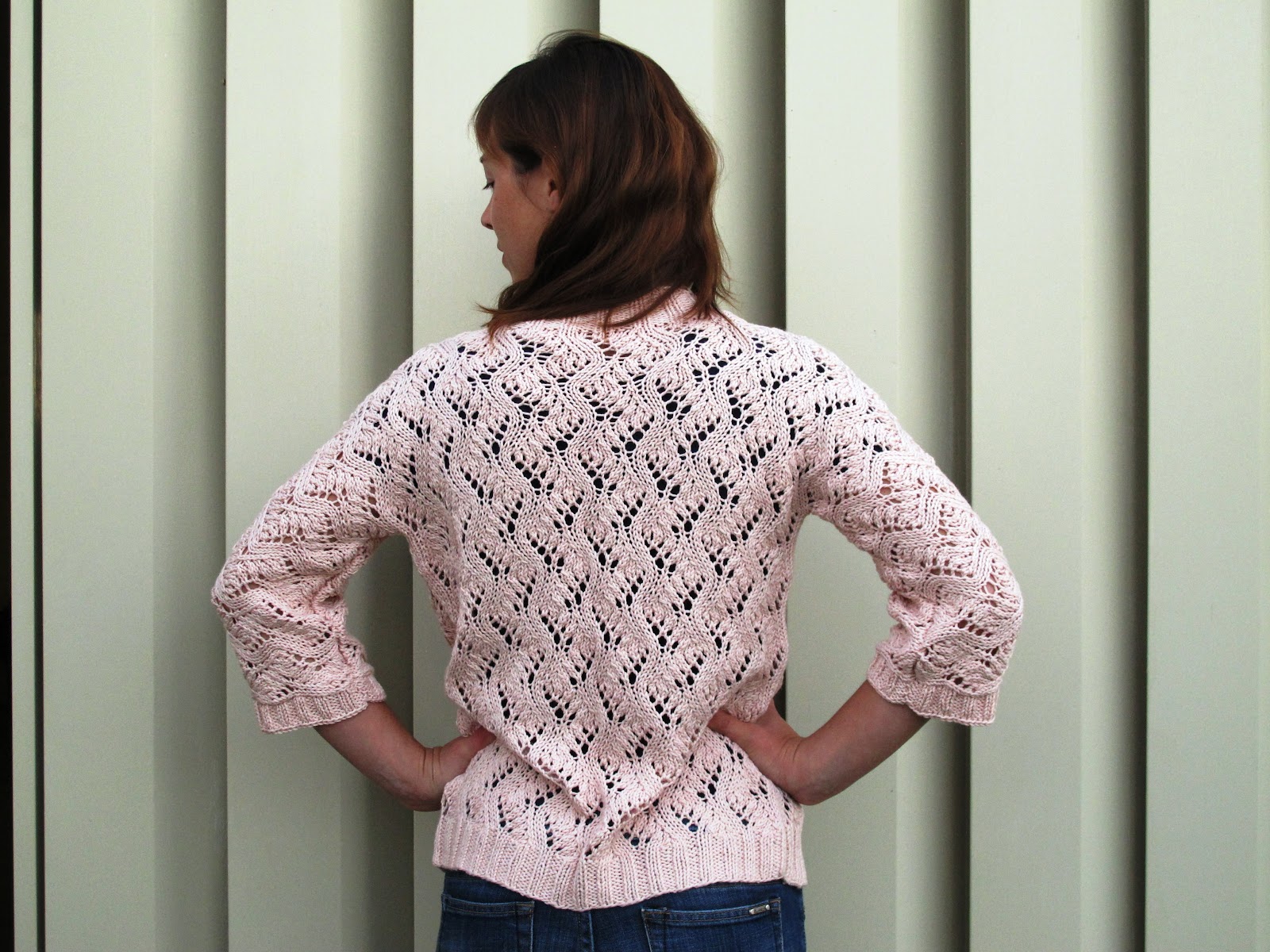

Ecco qua le mie modifiche:
Per il dietro del lavoro ho avviato solamente 76 maglie (1 m per la cucitura, 8 ripetizioni + 2 m, 1 altra m per l’altra cucitura) ed ho eseguito un totale di 5 ripetizioni in verticale.
Per le maniche ho avviato ad ambo i lati 45 maglie ed eseguito un totale di 5 ripetizioni in verticale per avere una circonferenza manica leggermente più agiata.
Una volta chiuse le maglie per lo scollo, mi sono rimaste 20 maglie per ciascuna delle due parti del davanti.
Il mio Kara mi piace tantissimo e non vedo l’ora di indossarlo!

Here are my mods:
For the back I CO just 76 stitches (1 st for the sewing, 8 repeats + 2 sts, 1 st for the other sewing) and I have done a total of 5 repeats in vertical.
For the sleeves, I CO 45 stitches and I have done 5 repeats in vertical in order to have a sleeve circumference slightly more comfortable.
Once the neck stitches were bounded off, I had 20 stitches left for each one of the front sections.
I am really pleased with my Kara and I can’t wait to wear it!


venerdì 8 giugno 2012

WoolyBoo


Come sapete, mi piace sperimentare nuovi filati e solo raramente uso lo stesso filo più di una volta, anche se mi è piaciuto da impazzire. Lo so che può sembrare stupido, ma adesso sul mercato ci sono talmente tanti marchi e prodotti che ritengo sia un peccato non provarne il più alto numero possibile. Così vengo facilmente attratta dalle novità e di solito finisco per comprarle ed inevitabilmente innamorarmi di loro, anche se poi non sono fedele e sposto la mia attrazione sul altre fibre, colori e marchi.

Una delle mie ultime compere ed infatuazioni è stata WoolyBoo della Rosarios4, ditta portoghese incentrata sulla produzione di filati eco-friendly. 

WoolyBoo è un misto cotone (50%), bambù (35%) e lana (15%) presentato in gomitoli da 50 gr per un metraggio di 77m. E’ un filato a 8 capi, ritorti morbidamente e che quindi tende ad aprirsi e dividersi se con la punta dei ferri si entra tra i trefoli. Dal cotone e dal bambù provengono la lucentezza - anche se smorzata dalla presenza della lana - e la pesantezza del filato, mentre dalla lana la sofficità al tatto e la sensazione di calore che ne deriva. L’alta percentuale di cotone diminuisce notevolmente l’elasticità data dalla lana, ma nel complesso il filato non risulta propriamente rigido e si presta bene anche a lavorazioni con trecce, creando effetti davvero plastici.

Kara in progress
La plasticità e tridimensionalità creati con la lavorazione, sono accentuati anche dal colore. Infatti WoollyBoo, essendo costituito da fibre diverse che ovviamente assorbono il colore in maniera diversa, è caratterizzato da lievi sfumature che rendono il lavoro vagamente variegato e movimentato. Inoltre le tinte usate sono, così come per molti altri dei prodotti della Rosarios4, di derivazione naturale e perciò le nuances sono tenui e mai troppo vivaci, perfette per capi da un allure elegante, oltre che per quelli da bambini.

L’etichetta suggerisce la lavorazione con ferri da 6 mm, ma io ho dovuto diminuire il numero ed usare quelli da 4 mm, come del resto mi è già capitato di dover fare altre volte con differenti filati dello stesso marchio. La resa è mio parere assai elevata, considerando che si tratta di gomitoli da solo 77 m, e l’acquisto risulta essere azzeccassimo se si considera anche l’ottimo rapporto qualità-prezzo del prodotto.


venerdì 30 dicembre 2011

Elsebeth Lavold | Silky Wool


Silky Wool: 45% lana, 35% seta e 20% nylon; 50g = 175m, colore 63.

Adoro questo filato per un sacco di ragioni. Primo: mi ricorda moltissimo un altro che a sua volta mi fece innamorare, il Butterfly della Rosarios 4. Nonostante la percentuale di seta nella Silky Wool sia nettamente inferiore, al tatto e alla vista invece questi due filati sono assai simili: morbidi seppur non propriamente “setosi” e lucidi, anzi piuttosto rustici e non proprio brillanti. Secondo: era da un po’ che non usavo un filo così sottile e mi è piaciuto avere tra le mani un alto numero di maglie, tutte perfette, che non fanno una piega. Devo infatti dire che la Silky Wool è piuttosto rigida e poco elastica e le maglie restano in posizione senza cedere né deformarsi e adoro questa sua caratteristica. Terzo: il colore che ho scelto mi fa impazzire (anche gli altri però non sono da meno): un meraviglioso melanzana che già mi vedo addosso, magari insieme a del rosso o del blu. Ne deduco che i viola entrano a pieno titolo tra i miei colori preferiti!

Ma vediamo di essere un po’ più tecniche e un po’ meno passionali.

Un piccolo appunto circa le “istruzioni” riportate sulla fascetta: si raccomanda di usare ferri da 4 mm per ottenere 22 m in 10 cm. Io ho dovuto usare punte da 3 mm. Ovviamente ognuna ha la propria mano e tensione, la mia è risultata essere ovviamente un pochino più lenta, ma trovavo decisamente troppo larghe e sformate le maglie lavorate con ferri più grossi da quelli da me scelti.
 
Il filato è, come ho detto, abbastanza rustico e poco elastico, permettendo così un’ottima definizione dei punti e quindi delle trecce e di motivi lace, io però l’ho usato per un modello semplice e senza fronzoli (però non vi dico quale!). 
Scorre bene sui ferri e credo sia uno dei fili che più mi dà soddisfazione lavorare, un vero piacere vederlo scivolare tra le dita. Provare per credere.

Ho già convinto mia sorella a comprarlo per realizzare il Dahlia Cardigan di Heather Zoppetti, e voi che fate? Lo potete trovare da Unfilodi.


Silky Wool: 45% wool, 35% silk and 20% nylon, 50g = 175m, color 63.

I love this yarn for a lot of reasons. First, it reminds me another one I love, Butterfly by Rosarios 4. Although in Silky Wool the percentage of silk is much lower, to the touch and the eyesight these two yarns are very similar, soft but not exactly "silky" and shiny, maybe more rustic and not exactly brilliant. Second, it was a bit that I did not use a fingering yarn and I loved having in my hands a large number of stitches, all perfectly aligned. In fact, I have to say that Silky Wool is quite rigid and inelastic and stitches remain in place without yielding or deformation, I love this its characteristic. Third: the color I chose drives me crazy (even though the others are no less lovely): I bought a wonderful eggplant purple and I already see him with reds or blues. I conclude that purple is now one of my favorite colors! 

But let's be a little more technical and less passionate.

A little note about the "instructions" given on the band: it is recommended to use 4 mm needles to obtain 22 stitches in 10 cm. I had to use 3 mm ones. Of course each person has its own gauge and tension, mine is found to be obviously a little slower, but stitches were coming out far too wide and baggy with larger needles, such as 3,5 or 4 mm ones.

The yarn is, as I said, quite rustic and not very elastic, allowing an excellent stitches definition and perfect for cables and lace patterns, but I've used it for a simple pattern, with no frills (but I’m not going to tell you which one!). 
The yarn runs well on the needles and I think is one of the yarns that gives me more satisfaction while I knit with it, a pleasure to feel it slipping through my fingers. Seeing is believing.

I've already convinced my sister to buy it to make the Dahlia Cardigan by Heather Zoppetti, and you will buy it too? You can find it at Unfilodi.


martedì 27 dicembre 2011

Alaska Snowflakes


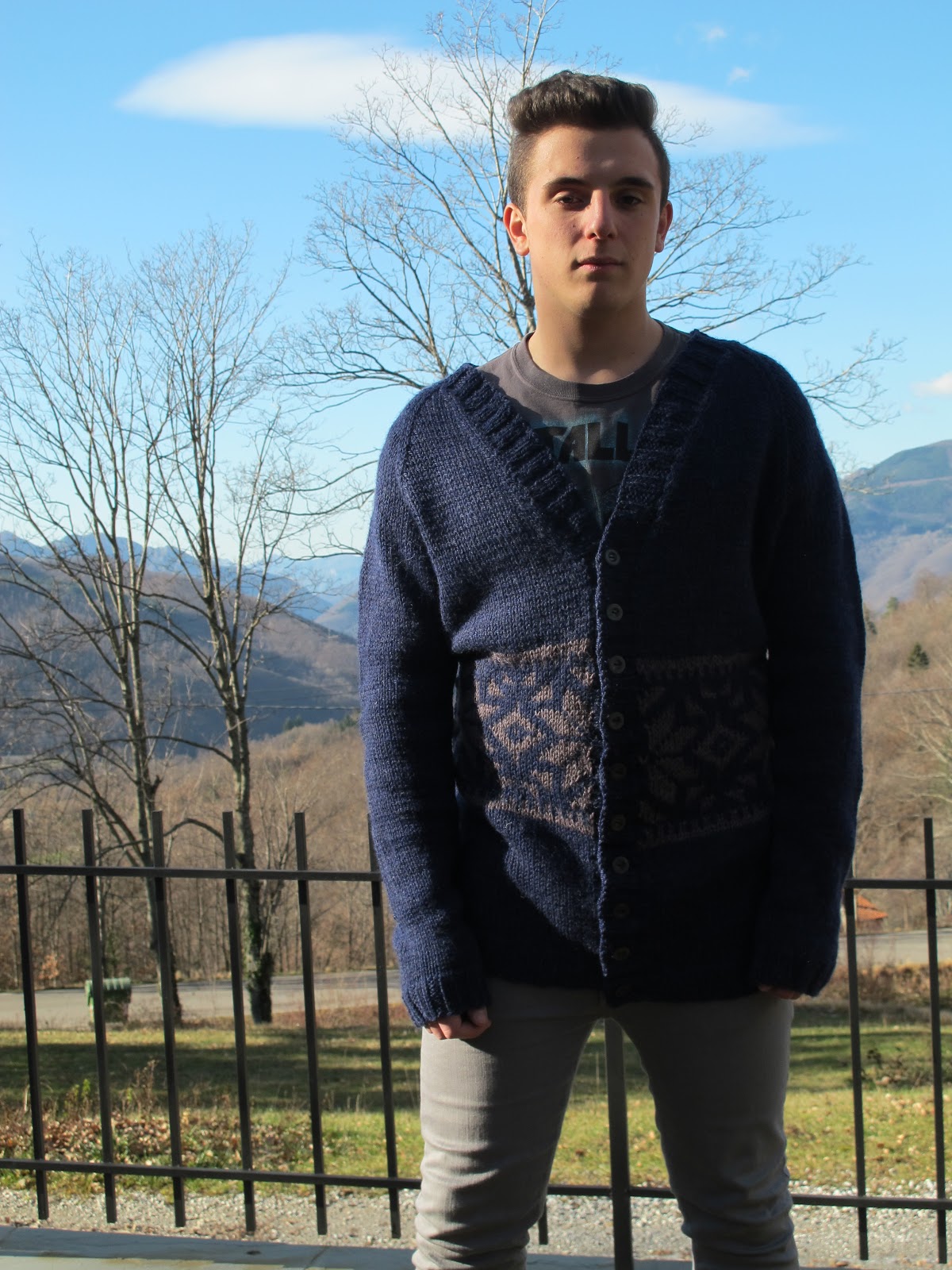
Finalmente sono riuscita a fotografare il cardigan di mio nipote, realizzato seguendo il disegno del Canyon Cardigan di Eunny Jang pubblicato su Interweave Knits Fall 2011 ed usando l’Alaska della DROPS Designs (100% pure lana vergine, 50 gr = 70 m, colore 12). 

La tecnica del Fair Isle mi piace davvero tanto e vedere il disegno finito mi ha regalato una grandissima soddisfazione. La parte più difficile e paurosa è stata sicuramente quella del taglio dello steek, ma per fortuna è filato tutto liscio come l’olio e niente si è disfatto.

La DROPS Alaska mi ha stupita, un filato davvero morbido e piacevole da lavorare, con un ottimo rapporto qualità-prezzo. Tutti motivi che mi incoraggiano a comprarla di nuovo. Il blu che ho scelto, un blu polveroso e non troppo vivace, si è accostato benissimo al grigio tortora dei fiocchi di neve del motivo e il risultato è perfetto! 


I finally had time to take some photos of my nephew’s cardigan, knitted following the motif chart of Canyon Cardigan by Eunny Jang published in Interweave Knits Fall 2011 and using Alaska by DROPS Designs (100% pure new wool, 50 gr = 70 m, color 12).

I really like Fair Isle technique and seeing the pattern finished gave me a lot of satisfaction. The hardest and scariest part has definitely been the cutting of the steek, but luckily everything run smoothly and nothing got unraveled.

I am amazed by DROPS Alaska, a really soft and nice yarn to work, with an excellent value for money. All reasons that  encourage me to buy it again. The blue I’ve chosen, a dusty blue and not too bright, matched perfectly with the gray snowflakes of the motif and the result is perfect!


martedì 13 dicembre 2011

Camel Hair


Camel Hair è una delle ultime novità prodotte da Grignasco, talmente nuova che non c’è nemmeno sul sito della ditta ed è per questo che ho deciso di parlarvene un po’. 

Camel Hair un mix di 85% di lana vergine merino e 15% cammello, presentato in gomitoli da 50 gr e 100 m di filato. La fascetta suggerisce di lavorarlo con ferri da 5 mm, ma io ho preferito usare quelli da 4 mm per ottenere un lavoro più omogeneo e compatto. Anche la tensione è risultata essere piuttosto diversa: 19 m per 10 cm contro le 16 suggerite. La resa è tuttavia buona e con soli 8 gomitoli sono riuscita a fare un maglione taglia 40 con trecce e collo alto.

Il filo scorre perfettamente sui ferri, bisogna solo fare un po’ di attenzione a non infilare le punte tra i 3 capi che lo compongono e tutto fila liscio che è una meraviglia. Al tatto il gomitolo è sofficissimo e particolarmente morbido, così come il lavoro che se ne ottiene: è un vero piacere sferruzzarlo. 

Data la sua morbidezza, suggerisco l’uso di Camel Hair per svariati lavori: sia per accessori da portare a diretto contatto con la pelle come cappelli e sciarpe, sia per caldi maglioni e cardigan per l’inverno. E’ un filato abbastanza elastico e drappeggia bene, permettendo la realizzazione di capi soffici e abbastanza fluenti. Le trecce magari ne risentono un po’, ma vengono comunque bene, ed altri tipi di lavorazione, come per esempio il chicco di riso, risultano ben definiti.

Come al solito ho lavato il capo a mano in acqua leggermente tiepida e con poco sapone e devo dire che ha perso un po’ di colore, lasciando l’acqua scura (ma non so se è un problema che riguarda solo il nero, che ho usato, o anche gli altri colori).

Camel Hair mi è piaciuto molto e se volete provare qualcosa di diverso dai soliti 100% merino ve lo consiglio, anche perché il prezzo è davvero interessante: circa 4€ a gomitolo. Io l’ho acquistato presso Unfilodi.


Camel Hair is one of the latest products by Grignasco, so new that  is not even on the website of the company and that's why I decided to talk a bit  about it.

Camel Hair is a mix of 85% merino wool and 15% camel, presented in balls of 50 g and 100 m of yarn. The label suggest you to work it with 5 mm needles, but I preferred to use 4 mm ones to obtain a fabric more homogeneous and compact. Even the tension was quite different: 19 sts in 10 cm against the 16 suggested. However, the yield is pretty good and with just 8 balls I could make a turtle neck sweater, size 40, with cables.

The yarn runs perfectly on the needles, you just have to pay a little attention so you do not put the needles in between the 3 ply that make it and everything runs smoothly like a dream. The ball is very fluffy and soft to the touch, as well as the work that you obtain: it is a pleasure to knit with this yarn.

Because of its softness, I suggest the use of Camel Hair for every garments you want: for accessories to wear in direct contact with the skin such as hats and scarves, or for warm sweaters and cardigans to put on in winter. It is a quite elastic yarn and drapes well, allowing the creation of fairly soft and flowing garments. The cables might suffer a bit, but they still stand out good, and other types of motifs, such as a seed stitch, result pretty well-defined.

As usual, I washed the pullover by hand in warm and slightly soapy water and I must say that it has lost some color, leaving the water dark (but I do not know if it's a problem just with the black, that I used, or with other colors too).
 
I liked Camel Hair very much and if you want to try something different from the usual 100% Merino I recommend you to buy it and by the way the price is really interesting, about 4 € per skein. I bought it at Unfilodi.


venerdì 2 dicembre 2011

Sfumature | Shades


Ecco qua finita la mini cappa che ho iniziato il 19 Novembre al Workshop organizzato a Carate Brinza da Luisa.

Here is the mini cape I begun during the workshop organized by Luisa in Carate Brianza on the 19th of November.

Il pattern è lo "Sfumature" di Emma e come al solito ho apportato alcune modifiche, seppur lievi. Innanzitutto ho seminato qua e là qualche aumento in più perché mi sembrava che la cappa risultasse essere un pochino troppo stretta. Poi, sempre per lo stesso motivo, ho spostato più in alto l’apertura centrale tra le trecce, anticipandola di una ventina di ferri circa e aggiungendo una serie di bottoncini per un’eventuale chiusura. Il risultato finale è una calda e colorata nuvola di morbidezza e non vedo l’ora di sfoggiarla sui miei cappotti!

The pattern is "Shades" by Emma and, as usual, I made some little changes. First I put here and there few more increases as it seemed that the cape was going to be a little too tight. Then, for the same reason, I moved further up the central opening between the cables, anticipating it of about twenty rows and adding a set of buttons for a possible closing. The result is a warm and colorful cloud of softness which I cannot wait to show off over my coats! =)


Il filato è la Malagrigo Worsted, un 100% merino a capo singolo filato a mano (100 gr per 192 m circa). Come riportato sulla fascetta, ho ottenuto circa 10 maglie in 10 cm usando ferri con punte da 5,5 mm. Scivola bene sui ferri, ma forse è meglio lavorarlo con quelli in alluminio per avere una scorrevolezza ottimale.
Al tatto la matassa è morbidissima e corposa, come del resto il lavoro che se ne ottiene. Lo trovo adattissimo per lavori con trecce, visto che la consistenza del filato mette perfettamente in rilievo e quindi in risalto questo tipo di lavorazione, sottolineando intrecci e curve senza distorcerle. Ovviamente, essendo abbastanza ingombrante, tende a non drappeggiare troppo, regalando piuttosto un effetto avvolgente e caldo, adattissimo per la realizzazione di capi invernali come maglioni, colli e sciarpe.
La cartella colori mette di fronte a dure scelte tanto è ampia. Si divide in tre categorie: true solids, con 12 colori ottenuti tingendo la lana prima della lavorazione; kettle dyed solids, più di 70 colori che riescono a coprire tutte le gradazioni, caratterizzati da lievi sfumature (tinti dopo la filatura); e infine i variegati, con circa 45 opzioni. Quello che ho usato per il mio lavoro rientra in quest’ultima categoria: Azalea, un mix di fucsia, viola e blu davvero energizzante e allo stesso tempo caldo. Perfetta scelta per l’inverno. Le lane o matasse sono tutte tinte a mano in piccoli bagni e viene raccomandato il lavaggio a mano e l’asciugatura in piano.
Io mi sono innamorata della Malabrigo Worsted e non posso che consigliarvi di provarla, anche perché il prezzo è davvero eccezionale: circa €10 a matassa! 


The yarn I used is Malagrigo Worsted, a 100% merino single ply handspun (100 g, 192 m). As reported on the label, I got about 10 stitches over 10 cm using 5.5 mm needles. It slides quite well on the needles but maybe it is better to work it with aluminum ones to obtain a very good sliding.
Skeins are soft and dense to the touch, like the knitting that you obtain. I highly recommend Malabrigo Worsted for cables projects, because the texture of the yarn highlights and emphasizing very well twists and curves without distorting them. Of course, being a quite bulky yarn, tends not to drape so easily, giving rather a wrap-around and warm effect, resulting then very suitable for the realization of winter clothes like sweaters, collars and scarves.
The color chart face you in front of tough choices as it is very large. It is divided into three categories: true solids, with 12 colors obtained dyeing the wool before processing it; kettle dyed solids, more than 70 colors that cover all nuances, characterized by subtle shades (dyed after spinning), and finally the variegated, with about 45 options. What I used for my work falls into the last category: Azalea, a mix of fuchsia, purple and blue at the same time very energizing and warm. Perfect choice for the winter. Wool or skeins are all hand-dyed in small batches and it is recommended hand washing and drying them flat.
I fell in love with Malabrigo Worsted and I can only advise you to try it, because the price is exceptional: about € 10 per skein!